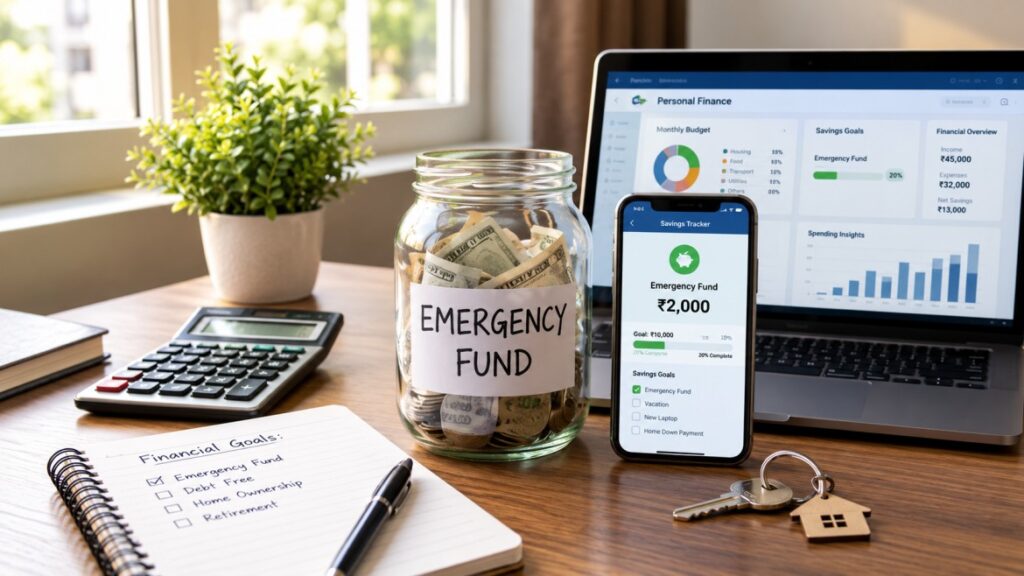
Quick Answer: What Is an Emergency Fund?
An emergency fund is money set aside specifically for unexpected expenses such as medical emergencies, job loss, urgent home repairs, or car repairs. It acts as a financial safety net, helping you cover essential costs without relying on credit cards, personal loans, or dipping into your long-term investments.
In This Guide, You’ll Learn
Core Concepts: Understand what an emergency fund is and why every household needs a financial safety net.
Savings Target & Location: Learn how much money you should save and the best places to keep your emergency funds liquid and safe.
Strategy & Mistakes: Discover practical tips to build your savings faster and common mistakes to avoid along the way.
Introduction:
Life is full of unexpected surprises and not all of them are pleasant. A sudden job loss, an emergency medical bill, a major car repair, or an urgent home expense can put significant pressure on your finances if you’re unprepared.
Many people assume they’ll handle these situations when they happen, but without dedicated savings, unexpected expenses often lead to credit card debt, personal loans, or withdrawing money from long-term investments. These solutions may provide temporary relief, but they can create financial challenges that last for months or even years.
This is where an emergency fund becomes one of the most important parts of a healthy financial plan.
An emergency fund is money reserved exclusively for genuine emergencies. Instead of worrying about how you’ll pay for an unexpected expense, you already have money available to handle the situation. This financial cushion provides peace of mind and helps you avoid making rushed financial decisions during stressful times.
Unlike money saved for vacations, shopping, or planned purchases, an emergency fund has a single purpose: protecting your financial stability when life doesn’t go according to plan.
Building an emergency fund doesn’t require a high income or a large lump sum. Most people create one gradually by saving small amounts consistently over time. Even starting with a modest goal can make a meaningful difference when an emergency occurs.
Whether you’re just beginning your financial journey, supporting a family, running a small business, or planning for retirement, having an emergency fund can reduce financial stress and improve long-term money management.
In this guide, you’ll learn what an emergency fund is, why it’s essential, how much you should save, where to keep your money, and practical strategies to build your emergency savings faster.
What Is an Emergency Fund?
An emergency fund is a dedicated savings account designed to cover unexpected financial emergencies without disrupting your regular budget or long-term financial goals.
The money is reserved only for situations that are urgent, necessary, and unplanned.
Examples include:
- Unexpected medical bills
- Job loss or reduced income
- Major car repairs
- Emergency home repairs
- Essential travel during a family emergency
- Temporary loss of income due to illness
An emergency fund is not intended for planned purchases such as vacations, new gadgets, holiday shopping, or home renovations. Those expenses should be saved for separately.
Think of your emergency fund as financial insurance. While insurance policies protect you from specific risks, an emergency fund gives you immediate access to cash when you need it most.
Why Is an Emergency Fund Important?
Unexpected expenses are one of the biggest reasons people experience financial stress. Even individuals with stable jobs and regular incomes can face situations that require immediate cash.
Without emergency savings, many people turn to high-interest credit cards or personal loans to cover urgent expenses. Although borrowing may solve the immediate problem, it often creates additional financial pressure through interest payments and long-term debt.
An emergency fund helps you respond to financial challenges with confidence rather than panic. Here are some of the biggest reasons why every household should have one.
It Protects You During Job Loss: Losing your primary source of income can happen unexpectedly due to layoffs, company restructuring, or economic downturns. An emergency fund helps cover essential living expenses such as rent, groceries, utilities, insurance, and transportation while you search for a new job. Instead of accepting the first opportunity out of financial desperation, you’ll have more flexibility to find a position that’s right for you.
It Helps You Avoid Debt: Many unexpected expenses are paid using credit cards because people don’t have enough savings. The problem is that borrowing money often means paying high interest, making an emergency even more expensive over time. Using emergency savings instead allows you to handle the expense without adding debt to your financial obligations.
It Reduces Financial Stress: Financial emergencies can be emotionally overwhelming. Knowing you have money set aside specifically for unexpected situations provides peace of mind and reduces anxiety during difficult times. Instead of worrying about how you’ll pay an unexpected bill, you can focus on solving the actual problem.
It Protects Your Long-Term Investments: One of the biggest mistakes investors make is withdrawing money from retirement accounts or investment portfolios during emergencies. Selling investments at the wrong time may reduce long-term returns and could even result in taxes or penalties. An emergency fund allows your investments to continue growing while your emergency savings handle short-term financial needs.
It Gives You More Financial Freedom: Having emergency savings provides greater flexibility in your financial decisions. For example, you may feel more confident:
- Changing careers
- Starting a business
- Taking professional training
- Relocating for better opportunities
- Negotiating a better job offer
Financial security often creates opportunities that wouldn’t be possible without a safety net.
Real-Life Example: Imagine two individuals with similar incomes.
Michael has no emergency savings. When his car suddenly needs a $2,000 repair, he uses a credit card with a high interest rate. It takes him many months to repay the balance, and the interest increases the total cost. Emma, on the other hand, has built an emergency fund over the past two years.
When she faces the same repair bill, she pays for it directly from her emergency savings. She avoids debt, pays no interest, and continues following her long-term financial plan without interruption. The difference isn’t income it’s preparation.
Expert Tip: An emergency fund isn’t designed to earn the highest possible return. Its primary purpose is to provide quick, reliable access to cash when you need it most. Prioritize safety and accessibility over high investment returns.
Benefits of Having an Emergency Fund
Building an emergency fund is about more than saving money it’s about creating financial stability and protecting yourself from unexpected challenges. Here are some of the biggest benefits.
1. Protects Your Financial Stability
Unexpected expenses can disrupt even the best financial plans.
An emergency fund helps you continue paying for essential needs like housing, groceries, insurance, and transportation without falling behind on bills.
Instead of worrying about where the money will come from, you already have a financial safety net in place.
2. Helps You Avoid High-Interest Debt
Without emergency savings, many people rely on credit cards or personal loans during difficult times. While borrowing may solve an immediate problem, interest charges can make the expense far more costly over time. Using your emergency fund allows you to pay for unexpected expenses directly, helping you avoid unnecessary debt.
3. Reduces Stress and Anxiety
Money problems are one of the leading causes of stress. Knowing that you have savings available for emergencies provides peace of mind and helps you focus on solving the situation instead of worrying about how to pay for it.
4. Protects Your Long-Term Investments
If you don’t have emergency savings, you may be forced to sell investments during a market downturn. This could result in losses and reduce your long-term wealth. An emergency fund allows your investments to remain untouched while your savings cover short-term financial needs.
5. Gives You More Flexibility
Financial security creates opportunities.
An emergency fund can give you the confidence to:
- Change careers
- Start a business
- Take parental leave
- Relocate for better opportunities
- Pursue additional education
Instead of making decisions based on financial pressure, you can make choices that support your long-term goals.
How Much Emergency Fund Should You Have?
One of the most common questions people ask is:
How much money should I save? The answer depends on your financial situation, income stability, and monthly expenses. Most financial experts recommend saving three to six months of essential living expenses.
If You Have a Stable Job
Aim for 3 months of essential expenses. This is often sufficient for individuals with stable employment and predictable income.
If You’re Self-Employed or a Freelancer
Aim for 6 to 9 months of expenses. Income can fluctuate from month to month, so having additional savings provides greater financial security.
If You Have Dependents
Families with children or other dependents may benefit from saving 6 to 12 months of essential expenses, especially if they rely on a single income.
Emergency Fund Calculator
Use this simple table to estimate your savings goal.
Remember to calculate only essential expenses, including:
- Rent or mortgage
- Utilities
- Groceries
- Insurance
- Transportation
- Minimum debt payments
- Basic healthcare costs
Luxury spending, vacations, entertainment, and shopping generally shouldn’t be included.
Real-Life Example
Sara spends approximately $3,500 per month on essential living expenses.
Her recommended emergency fund would be:
- 3 months: $10,500
- 6 months: $21,000
- 12 months: $42,000
Rather than trying to save the full amount immediately, Sarah sets up an automatic monthly transfer of $300 into a dedicated emergency savings account. Over time, these consistent contributions help her reach her goal without placing unnecessary strain on her monthly budget.
Where Should You Keep Your Emergency Fund?
Choosing the right place to store your emergency savings is just as important as building the fund itself. The ideal location should provide:
- Easy access to your money
- Strong security
- Low risk
- Modest interest earnings
High-Yield Savings Account
A high-yield savings account is one of the best places to keep an emergency fund.
Advantages
- Easy access to cash
- FDIC or equivalent deposit protection (where applicable)
- Earns more interest than traditional savings accounts
- Low risk
For most people, this is the preferred option because it balances accessibility and safety.
Money Market Account
A money market account is another strong choice. It often provides:
- Competitive interest rates
- Easy withdrawals
- Strong security
- Flexible access
Some accounts also include check-writing privileges, making emergency funds easier to access when needed.
Traditional Savings Account
A regular savings account is also suitable if a high-yield option isn’t available.
Although interest rates may be lower, your money remains secure and accessible.
Cash at Home
Keeping a small amount of cash at home can be helpful for short-term emergencies like power outages or temporary banking issues. However, storing your entire emergency fund as cash isn’t recommended because:
- It earns no interest.
- It may be lost, stolen, or damaged.
- It isn’t protected like money held in insured financial institutions.
Where You Should NOT Keep Your Emergency Fund
Individual Stocks: Avoid volatile stock market shares that can drop in value right when you need the cash.
Cryptocurrency: Steer clear of digital coins and tokens prone to extreme, unpredictable market crashes.
High-Risk Investments: Skip speculative assets like options, futures, or startup equity that carry a high chance of total loss.
Long-Term Retirement Accounts: Do not lock your emergency cash into accounts like 401(k)s or IRAs that trigger heavy early-withdrawal penalties and taxes.
Real Estate Investments: Avoid tying up your liquidity in property or real estate syndications that take months to sell.
Standard Everyday Checking Accounts: Do not keep your emergency fund mixed with daily spending money, where it risks accidental depletion and earns zero interest.
Long-Term Certificates of Deposit (CDs): Avoid locking up your money in multi-year fixed terms that penalize you for taking it out early.
Peer-to-Peer Lending Platforms: Steer clear of alternative lending pools that carry high borrower default risks and lack immediate cash-out options.
Physical Cash Hoarded at Home: Avoid storing large amounts of cash physically at home, as it is vulnerable to theft, fire, damage, and loss of purchasing power from inflation.
High-Yield Collectibles: Skip alternative assets like art, vintage cars, or rare memorabilia that lack immediate liquidity and have unpredictable resale markets.
Expert Tip: Separate your emergency fund from your everyday spending account. Keeping it in a dedicated savings account reduces the temptation to use the money for non-essential purchases while ensuring it’s available when a genuine emergency occurs.
How to Build an Emergency Fund
Building an emergency fund may seem overwhelming, especially if you’re starting from zero. However, the goal isn’t to save several months’ worth of expenses overnight. The key is to build your fund gradually through consistent saving habits. Here are practical steps to get started.
1. Set a Realistic Savings Goal
Instead of focusing immediately on saving six months of expenses, begin with a smaller milestone. For example:
- First goal: $500
- Second goal: $1,000
- Final goal: Three to six months of essential living expenses
Breaking your goal into smaller milestones makes the process more achievable and keeps you motivated.
2. Calculate Your Monthly Essential Expenses
Review your monthly budget and determine how much you spend on necessities.
Include expenses such as:
- Rent or mortgage
- Utilities
- Groceries
- Insurance
- Transportation
- Healthcare
- Minimum loan payments
Knowing this number helps you calculate the size of your emergency fund.
3. Automate Your Savings
One of the easiest ways to build an emergency fund is to automate the process.
Set up an automatic transfer from your checking account to a dedicated savings account every payday. Even small monthly contributions can grow into a meaningful financial cushion over time.
4. Save Windfalls
Unexpected income can help you reach your goal faster.
Consider saving part or all of:
- Tax refunds
- Work bonuses
- Cash gifts
- Freelance income
- Side hustle earnings
Using these one-time payments wisely can significantly accelerate your progress.
5. Reduce Unnecessary Spending
Building an emergency fund often doesn’t require earning more money it simply requires spending more intentionally.
Look for opportunities to reduce discretionary expenses such as:
- Dining out
- Subscription services
- Impulse purchases
- Entertainment spending
Redirecting even a small amount each month can have a big impact over time.
6. Review Your Progress Regularly
Check your emergency savings every month. Tracking your progress helps maintain motivation and allows you to adjust your savings plan if your financial situation changes.
Common Emergency Fund Mistakes to Avoid
Many people begin saving but unintentionally weaken the effectiveness of their emergency fund. Avoid these common mistakes.
Using It for Non-Essential Purchases
An emergency fund should only be used for genuine emergencies.
Examples that generally do not qualify include:
- Vacations
- Holiday shopping
- New electronics
- Luxury purchases
- Planned home upgrades
Saving separately for these goals helps preserve your emergency fund for when it’s truly needed.
Investing Your Emergency Fund
Although investing can generate higher returns over time, emergency savings should remain stable and easily accessible. Investments can lose value, especially during market downturns. Your emergency fund should prioritize security and liquidity, not maximum returns.
Waiting Until You Can Save a Large Amount
Some people delay building an emergency fund because they believe they need thousands of dollars before starting. In reality, beginning with small, consistent contributions is far more effective than waiting for the “perfect” time.
Keeping Everything in Your Checking Account
When emergency savings remain in your everyday spending account, it’s easier to spend them accidentally. Keeping the money in a separate savings account helps reduce temptation while maintaining quick
Emergency Fund vs Regular Savings Account
People often confuse an emergency fund with general savings. While both involve saving money, they serve different purposes.
Ideally, you should have both. An emergency fund protects your financial stability, while regular savings help you achieve planned financial goals.
Who Should Have an Emergency Fund?
The simple answer is everyone. Whether your income is large or small, unexpected expenses can affect anyone. An emergency fund is especially important for:
- Employees
- Freelancers
- Self-employed professionals
- Small business owners
- Families with children
- Students with part-time jobs
- Retirees
- Anyone with financial responsibilities
No matter your stage of life, having emergency savings provides greater financial security and peace of mind.
FAQ
Quick Answers to Common Questions
conclusion
Unexpected financial challenges are a normal part of life, but they don’t have to become long-term financial setbacks.
An emergency fund provides a financial cushion that helps you handle job loss, medical expenses, major repairs, and other unexpected costs with confidence. Rather than relying on credit cards or loans, you can use your own savings to protect your financial stability.
The most important step is simply getting started. Even if you can only save a small amount each month, consistency matters more than perfection. Over time, those regular contributions can grow into a meaningful financial safety net.
As your savings grow, you’ll gain greater peace of mind, reduce financial stress, and create a stronger foundation for future financial goals such as investing, retirement planning, and long-term wealth building.