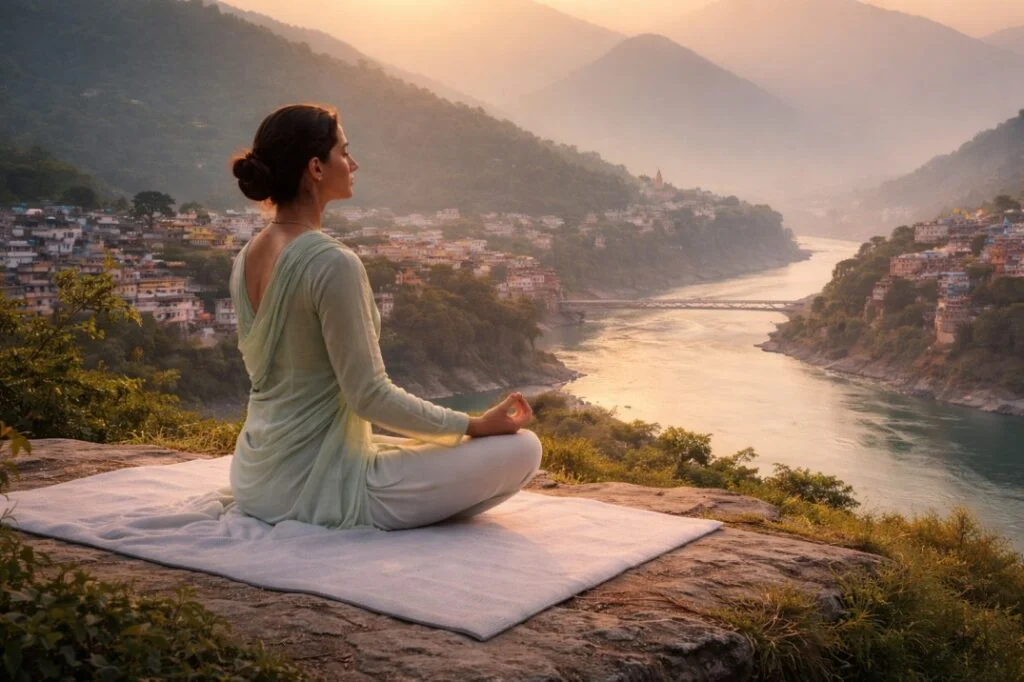
Yoga and Meditation: More Than Just a Trend
It's India's Science of Life
A journey through thousands of years of wisdom, exploring how ancient Indian practices continue to guide
humanity toward balance and inner peace.
Blog
Introduction
More Than Just Poses: Today, you see yoga and meditation sold as quick fixes for fitness, stress relief, or just the latest fad. Social media is full of fancy poses in pretty places. This has made yoga popular, but it often misses the point.
Yoga and meditation aren't some recent discovery, and they're not just about your body. They're old practices from India, designed thousands of years ago to explore what it means to be human. These practices help you understand your mind, control your feelings, train your body, and find your true self.
India gave yoga and meditation to the world. It's more than just a cultural thing it's a civilizational contribution. These systems still show people how to find balance and peace in a crazy world.
Yoga as a Science of Life, Not Just a Wellness Trend
People often think yoga is just exercise or a trendy way to feel good. But really, yoga started as a way to understand life. Old Indian thinkers studied yoga with as much care as scientists today study things like physics or biology.
Yoga was created to examine how the human mind works, how your breath, body, and feelings relate, what consciousness is, and why people suffer and get attached to things.
Unlike current medicine, which often treats symptoms, yoga tries to fix the cause of problems. Indian philosophy says that when you're sick, upset, or confused, it's because something inside you is off.
The Yoga Sutras of Patanjali, a key text, says yoga is about Chitta Vritti Nirodha calming your mind. That shows how deep and scientific yoga is.
How Breath (Pranayama) Fits Into Yoga and Meditation
Breath is very important in yoga and meditation. In Indian tradition, breath is Prana, the energy that keeps us alive. Pranayama is about controlling and expanding this energy.
Old yogis noticed connections between how we breathe and how we feel:
•
Shallow breathing makes you anxious
•
Uneven breathing messes with your focus
•
Slow, steady breathing calms you down
Benefits of Regular Pranayama Practice
Regular pranayama practice offers deep physical, mental, and emotional benefits by regulating Prana (life energy) and harmonizing the body–mind system.
Physical Health Benefits
- Increases oxygen supply to the brain, improving mental clarity and alertness
- Strengthens lung capacity and respiratory efficiency
- Improves heart health by stabilizing heart rate and blood pressure
- Enhances digestion and metabolism through improved oxygenation
- Supports immune system function by reducing stress-induced inflammation
- Helps detoxify the body by improving circulation and oxygen flow
- Improves sleep quality and reduces insomnia
- Assists in managing lifestyle-related conditions such as asthma, hypertension, and fatigue
Mental and Emotional Benefits
- Balances the autonomic nervous system (sympathetic and parasympathetic)
- Reduces stress, anxiety, and emotional reactivity
- Improves emotional regulation and mood stability
- Enhances concentration, memory, and cognitive performance
- Reduces mental restlessness and overthinking
- Promotes mental calmness and inner clarity
- Builds emotional resilience and patience
Long-Term Lifestyle Benefits
- Promotes overall energy balance and vitality
- Improves posture and breathing habits in daily life
- Encourages disciplined and mindful living
- Supports long-term mental well-being
- Enhances stress tolerance in professional and personal life
Spiritual and Mindfulness Benefits
- Deepens focus and meditation practice
- Enhances awareness of breath and present-moment mindfulness
- Improves mind–body connection
- Prepares the mind for higher states of meditation
- Encourages self-awareness and introspection
- Cultivates inner balance and harmony
Popular methods like Anulom Vilom, Bhramari, Kapalbhati, and Ujjayi are used all over the world. Researchers now agree that controlled breathing affects things like heart rate, blood pressure, and emotions proving that old Indian ideas were right.
Yoga and Meditation in Ayurveda: A Combined Health Approach
Yoga and meditation connect strongly with Ayurveda, India's old system of medicine. Ayurveda sees health as a balance between your body, mind, senses, and surroundings, not just the lack of sickness.
Everyone has a type, or Dosha Vata, Pitta, or Kapha. Old yoga practices were made to fit these types, making sure they were safe and effective.
Yoga in Different Branches of Indian Thought
Yoga in Different Branches of Indian Thought
Indian thought has many spiritual paths. It recognizes that people are different and offers yoga paths for different personalities and situations.
Karma Yoga (The Path of Action)
Karma Yoga teaches you to do things without worrying about the results. It focuses on duty, responsibility, and helping others. This is useful in everyday life, encouraging you to work ethically and be responsible in society.
Bhakti Yoga (The Path of Devotion)
Bhakti Yoga is about love, giving yourself up, and connecting with something bigger. It helps you be humble, thankful, and kind, giving you peace.
Jnana Yoga (The Path of Knowledge)
Jnana Yoga is about asking questions and understanding things. By questioning and learning, you try to find out what's really real and who you really are.
Raja Yoga (The Path of Meditation)
Raja Yoga, linked to Patanjali's eight steps, focuses on meditation and controlling your mind. It mixes ethical behavior, posture, breath, focus, and finding yourself.
These paths show that yoga includes everyone and can be changed to fit different people.
Meditation and How India Sees the Mind
Indian thought says the mind is strong but also unstable. Old texts say it is:
- Always in motion
- Easily influenced by desire and fear
- Capable of both creation and suffering
Meditation trains and calms the mind. Instead of stopping thoughts, it helps you be aware and let go.
Over time, meditation can help you:
Regular meditation practice helps improve emotional control, encourages patience and kindness, and supports clear and mindful decision-making. By enhancing self-awareness, meditation allows individuals to understand their thoughts and emotions more deeply, leading to better personal growth and mental clarity. These benefits also help reduce stress levels, improve stress management skills, and promote long-term mental well-being, making meditation an effective tool for a balanced and healthy lifestyle.
Research That Supports Yoga and Meditation
Recently, researchers have studied yoga and meditation a lot. They've found that these practices:
Lower stress hormones
Change your brain
Help you control your emotions
Help your heart
Strengthen your body
Reduce inflammation
Meditation is now used for anxiety, depression, PTSD, addiction, and pain. Yoga is suggested for fixing posture, recovering from injuries, and managing conditions like diabetes and high blood pressure.
Modern Applications
In Schools
Schools are starting to realize that grades aren't everything. Emotional intelligence, focus, and handling stress are also important. Many schools now use yoga and meditation to help students focus and remember things, reduce stress about tests, help them control their emotions, and teach discipline and confidence.
In the Workplace
Job burnout is a big issue. Long hours and constant pressure hurt employees' health and work. Many companies now use yoga and meditation to reduce stress-related absences, help people focus and be creative, improve leadership and teamwork, and promote a better work-life balance.
Yoga Tourism
Yoga and meditation have also boosted India's economy through tourism. Many people visit India to learn yoga where it started. Popular places include Rishikesh, Varanasi, Dharamshala, and Kerala keeping old traditions alive while sharing culture globally.
Ethical Living and Yoga
A key part of yoga is living ethically. Principles like Yama and Niyama teach:
Non-violence (Ahimsa)
Being kind and compassionate to all living beings
Honesty (Satya)
Living with truth and integrity
Self-discipline (Tapas)
Cultivating inner strength and determination
Contentment (Santosha)
Finding peace with what you have
Self-study (Svadhyaya)
Continuous learning and self-reflection
In Conclusion: A Timeless Path
Yoga and meditation are much more than just exercise. They're complete ways to grow as a person, perfected by Indian thinkers over thousands of years.
In a stressful and uncertain world, they offer clarity and balance. They remind us that real change starts inside.
Yoga and meditation are India's gift to the world a path to harmony.
Ancient Wisdom
Exploring the timeless science of yoga and meditation rooted in India’s spiritual and philosophical heritage.
Experience • Knowledge • Authority • Trust
ALSO READ- Along with inner awareness through yoga and meditation, staying informed about modern challenges is essential readers may also find our educational guide on cyber fraud in India useful for digital safety awareness.
FAQ
Quick Answers to Common Questions