Who Should Read This Guide?
Introduction
Your credit score is more than just a three-digit number it’s one of the strongest indicators of your financial health. Whether you’re applying for a credit card, planning to buy a home, financing a car, or taking out a personal loan, lenders use your credit score to decide how much they trust you as a borrower.
A higher credit score can improve your chances of loan approval, unlock lower interest rates, and even qualify you for better credit card rewards. On the other hand, a poor credit score can lead to rejected applications, higher borrowing costs, and fewer financial opportunities.
The good news is that improving your credit score doesn’t require expensive credit repair services or risky shortcuts. By understanding how credit scores work and adopting responsible financial habits, you can gradually strengthen your credit profile and improve your borrowing power.
In this guide, you’ll learn how to improve your credit score quickly, what factors influence your score, the most common mistakes to avoid, and practical strategies that can help you build long-term financial confidence.
Quick Overview
If you’re looking for the fastest ways to improve your credit score, focus on these habits:
- Always pay your EMIs and credit card bills on time.
- Keep your credit utilization below 30%.
- Review your credit report regularly for errors.
- Avoid applying for multiple loans within a short period.
- Maintain older credit accounts whenever possible.
- Monitor your credit score to track your progress.
These habits may seem simple, but consistently following them is the foundation of a healthy credit profile.
What Is a Credit Score?
A credit score is a numerical rating that reflects how responsibly you’ve managed borrowed money in the past. Banks and financial institutions use this score to estimate the risk of lending money to you.
Instead of focusing only on your income, lenders evaluate your overall credit behavior. They consider whether you pay bills on time, how much credit you use, how long you’ve maintained credit accounts, and whether you’ve recently applied for multiple loans.
In India, the CIBIL Score is the most commonly used credit score, although other credit bureaus such as Experian, Equifax, and CRIF High Mark also provide credit reports. Regardless of the scoring model, the objective remains the same: helping lenders assess your repayment reliability.
Why Your Credit Score Matters
A healthy credit score affects more than just loan approvals. It can influence the cost of borrowing and the financial opportunities available to you.
Better Loan Approval Chances
Banks prefer borrowers with a strong repayment history because they represent lower lending risk. A higher credit score can increase your chances of getting approved for personal loans, education loans, home loans, and vehicle financing.
Lower Interest Rates
Even a small reduction in your loan interest rate can save thousands over the life of a loan. Borrowers with good credit scores are often offered more competitive rates than those with weaker credit profiles.
Higher Credit Limits
Credit card companies are generally more willing to increase credit limits for customers who consistently manage their accounts responsibly.
Easier Financial Planning
A strong credit score gives you greater flexibility when unexpected expenses arise or when you’re planning significant financial milestones such as purchasing a home or starting a business.
Quick Tip: A good credit score doesn’t just make borrowing easier it can reduce the overall cost of borrowing and provide greater financial flexibility throughout your life.
How Credit Scores Are Calculated
Many people assume that income is the biggest factor affecting a credit score. In reality, your score is based primarily on how you manage credit rather than how much you earn.
Payment History: Paying your EMIs and credit card bills before the due date is one of the strongest signals of responsible credit behavior. Even a single late payment can affect your score and remain on your credit report for a long time.
Best Practice: Enable automatic payments or calendar reminders to avoid missing due dates.
Credit Utilization Ratio: Credit utilization refers to how much of your available credit limit you’re currently using. For example, if your credit card limit is ₹1,00,000 and your outstanding balance is ₹20,000, your credit utilization ratio is 20%. Financial experts generally recommend keeping utilization below 30% because it demonstrates responsible credit management.
Credit History Length: Older credit accounts help lenders evaluate your long-term repayment habits. Closing your oldest credit card without a good reason may shorten your credit history and affect your credit profile. If your oldest card has no annual fee, keeping it active with occasional purchases is often a better choice.
Credit Mix: A balanced combination of credit products such as credit cards, home loans, or auto loans can contribute positively to your credit profile when managed responsibly. However, avoid taking unnecessary loans simply to improve your credit mix. Borrow only when it aligns with your financial goals.
Recent Credit Applications: Each time you apply for a new loan or credit card, the lender may perform a hard inquiry on your credit report. Submitting multiple applications within a short period can make lenders think you’re experiencing financial stress, which may temporarily reduce your credit score. Instead of applying everywhere, compare lenders carefully and submit applications only when necessary.
What Is Considered a Good Credit Score?
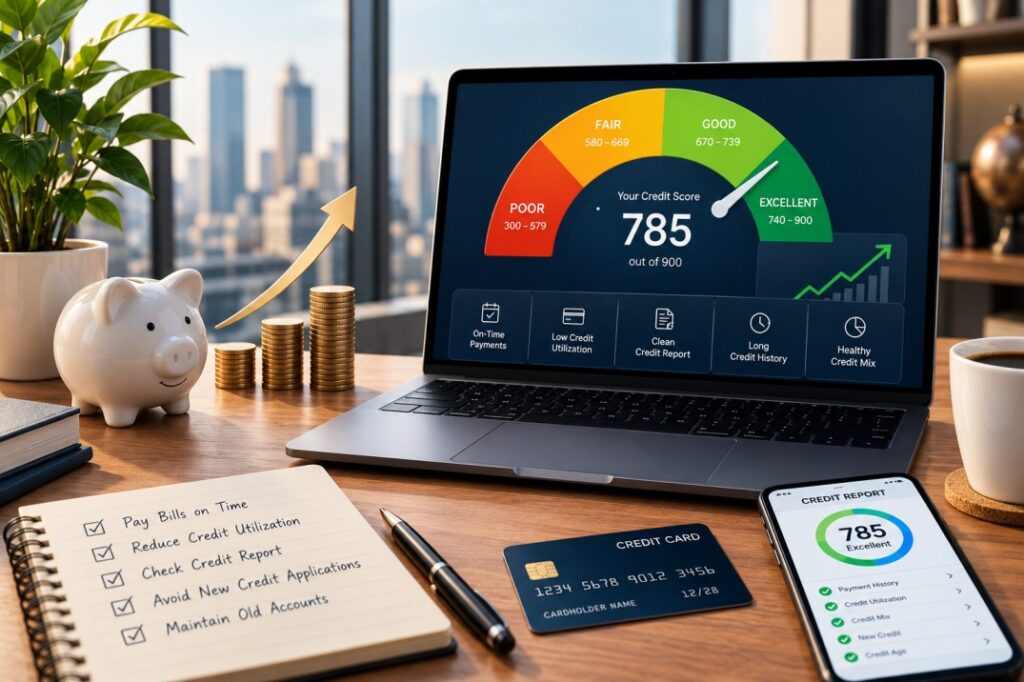
Although scoring models vary slightly, the following ranges provide a useful benchmark.
Remember: Your credit score is important, but lenders also consider your income, existing debt, employment stability, and overall financial profile before making lending decisions.
Why Your Credit Score May Be Low
Many people unknowingly damage their credit score through everyday financial habits. Common reasons include:
- Missing EMI or credit card payments.
- Keeping credit card balances too high.
- Applying for multiple loans within a short period.
- Ignoring errors in your credit report.
- Closing old credit accounts unnecessarily.
- Defaulting on loans or settlements.
The good news is that these issues can often be corrected with consistent financial discipline.
10 Proven Ways to Improve Your Credit Score Quickly
There’s no magic trick that can instantly boost your credit score overnight. However, following the right financial habits consistently can help improve your credit profile much faster than many people expect. Here are ten proven strategies that can make a real difference.
1. Always Pay Your Bills on Time
If you want to improve your credit score quickly, paying every bill before its due date should be your top priority. Your payment history is one of the most important factors used to calculate your credit score. Late payments on credit cards, EMIs, or loans signal to lenders that you may struggle to repay future debt.
Best Practices
- Enable AutoPay whenever possible.
- Set payment reminders on your phone.
- Pay at least the minimum amount due if you can’t pay the full balance immediately.
Expert Tip: Even one missed payment can affect your credit score, while consistent on-time payments help build a strong credit history over time.
2. Keep Your Credit Utilization Below 30%
Credit utilization is the percentage of your available credit limit that you’re currently using.
For example:
- Credit Limit: ₹1,00,000
- Outstanding Balance: ₹25,000
- Credit Utilization: 25%
Financial experts generally recommend keeping your utilization below 30% because it shows lenders that you manage credit responsibly. If you’re using most of your available credit limit every month, your score may decline even if you never miss a payment.
How to Reduce Utilization
- Pay your credit card before the billing cycle ends.
- Spread expenses across multiple cards if appropriate.
- Request a higher credit limit only if your income supports it.
3. Check Your Credit Report for Errors
Many people assume their credit report is always accurate, but mistakes can happen. Incorrect information may include:
- Wrong personal details
- Duplicate loan accounts
- Incorrect late payment records
- Closed loans still marked as active
- Unauthorized credit accounts
Reviewing your credit report regularly allows you to identify these issues early and request corrections from the credit bureau if necessary. Correcting reporting errors is one of the simplest ways to improve your credit score when inaccurate information is affecting it.
4. Avoid Applying for Multiple Loans at Once
Every loan or credit card application may result in a hard inquiry on your credit report. Submitting several applications within a short period can make lenders believe you’re urgently seeking credit, which may temporarily lower your score. Instead of applying to multiple banks, compare lenders first and apply only where you’re most likely to qualify. Quality applications are always better than quantity.
5. Keep Your Oldest Credit Card Open
Many people close older credit cards because they no longer use them. While this might seem like a good financial decision, it can sometimes reduce the average age of your credit history. A longer credit history generally helps lenders better understand your repayment behavior.
If your oldest credit card:
- Has no annual fee
- Is in good standing
- Doesn’t encourage unnecessary spending
keeping it active can support your long-term credit profile.
6. Reduce Outstanding Debt Gradually
Large outstanding balances can make lenders view you as a higher-risk borrower. Instead of trying to pay everything off at once, focus on a structured repayment strategy.
A simple approach is to:
- Pay off high-interest debt first.
- Continue making minimum payments on other accounts.
- Avoid taking on new debt while reducing existing balances.
Every reduction in outstanding debt strengthens your overall financial position and supports long-term credit improvement.
7. Don’t Become a Loan Guarantor Without Understanding the Risk
Helping a friend or family member by becoming a guarantor may seem generous, but it also creates financial responsibility. If the primary borrower misses payments, your credit profile may also be affected. Before agreeing to become a guarantor or co-applicant, consider:
- The borrower’s repayment history
- Your own future borrowing plans
- The financial risks involved
Only take on this responsibility if you’re comfortable with the potential consequences.
8. Monitor Your Credit Score Regularly
Improving your credit score isn’t something you do once and forget.
Checking your credit score every few months helps you:
- Track improvements
- Identify unexpected changes
- Detect fraudulent activity
- Understand how your financial habits affect your credit profile
Monitoring your own credit report through authorized services is generally considered a soft inquiry and doesn’t negatively affect your score.
9. Avoid Closing Loans Immediately After Repayment
Successfully repaid loans demonstrate responsible borrowing behavior. Before closing every account immediately, understand how it may affect your overall credit history. Maintaining a healthy mix of well-managed credit accounts often provides stronger long-term benefits than frequently opening and closing accounts.
10. Build Healthy Financial Habits
The fastest way to improve your credit score isn’t finding a shortcut it’s creating consistent financial habits.
Focus on:
- Paying every bill on time.
- Spending within your budget.
- Avoiding unnecessary debt.
- Reviewing your credit report regularly.
- Planning large purchases carefully.
Over time, these habits not only improve your credit score but also strengthen your overall financial health.
Financial Insight: A strong credit score gives you better borrowing opportunities, but long-term financial success comes from combining responsible credit management with smart investing and disciplined saving. A healthy credit score is the foundation of good financial planning. Once you’ve improved your credit profile, you can explore our guides on How to Invest $100 Wisely and Best Investment for Highest Returns to start building long-term wealth through smarter investment decisions.
Common Mistakes That Hurt Your Credit Score
Many people unknowingly reduce their credit score through avoidable financial mistakes. Here are some of the most common ones:
Avoiding these mistakes is often just as important as following good credit habits.
Quick Tip: Improving your credit score isn’t about making one big financial decision. It’s about making small, consistent choices every month. Paying bills on time, keeping debt under control, and avoiding unnecessary borrowing can gradually strengthen your credit profile and open the door to better financial opportunities.
30-Day Credit Score Improvement Plan
If you’re serious about improving your credit score, following a simple action plan can help you build better financial habits. While dramatic improvements usually take longer than 30 days, this plan helps you get started on the right track.
Remember: Improving your credit score is a gradual process. Consistency always delivers better results than trying to find shortcuts.
Before Applying for Any Loan
Whether you’re planning to apply for a home loan, personal loan, or car loan, taking a few simple steps beforehand can improve your chances of approval.
Check Your Credit Score: Review your latest credit score and credit report to understand your current financial position.
Reduce Outstanding Debt: Lowering your existing debt improves your debt-to-income ratio and shows lenders that you’re managing your finances responsibly.
Avoid New Credit Applications: Applying for multiple loans or credit cards just before submitting a loan application may negatively affect your credit profile.
Verify Your Credit Report: Ensure your report doesn’t contain incorrect information, duplicate accounts, or outdated loan records that could delay approval.
Organize Your Financial Documents: Keeping salary slips, bank statements, tax documents, and identity proofs ready can speed up the loan approval process.
Credit Score Improvement Checklist
Before you finish reading, use this checklist to see if you’re following the financial habits that can help improve your credit score over time.
- Pay every EMI and credit card bill before the due date.
- Keep your credit utilization below 30% of your available limit.
- Review your credit report regularly for accuracy.
- Dispute and correct errors in your credit report as soon as possible.
- Avoid unnecessary loan or credit card applications.
- Keep your oldest credit accounts active whenever possible.
- Pay more than the minimum amount due on your credit card whenever you can.
- Review and update your monthly budget to ensure timely repayments.
Quick Tip: If you can consistently follow most of these habits, you’re already on the right path toward building a stronger credit score and a healthier financial profile.
FAQ
Quick Answers to Common Questions
Final Thoughts
Improving your credit score isn’t about finding a secret trick or an overnight solution. It’s about consistently making smart financial decisions that demonstrate responsibility over time.
Paying your bills on time, maintaining low credit utilization, reviewing your credit report regularly, and avoiding unnecessary debt are habits that gradually strengthen your financial profile. While improvements may not happen immediately, every positive financial decision contributes to a stronger credit history.
Remember that your credit score is only one part of your overall financial journey. Once you’ve established a healthy credit profile, you can focus on building long-term wealth through disciplined saving and investing.
Editorial Note
This article is intended for educational purposes only and should not be considered financial, legal, or lending advice. Credit score calculations and lending policies may vary between financial institutions and credit bureaus. Always verify the latest information with your lender or the relevant credit bureau before making important financial decisions.